What to consider when choosing a new van.

Like our vans, our guide is designed to drive your business forward quickly and purposefully, so that you make the right choice for your needs and budget.

Find out how a van fits into your business offering and explore the different types available. And, to help you get the best return for your business, you can also discover the most tax-efficient way to buy.
So, what is a commercial vehicle?

A commercial vehicle is defined by how it serves your business – you can use it to transport cargo, people or equipment. Looking at specific van details, Light Commercial Vehicles (LCV) can weigh up to 3,500kg including payload, and there are several different van types to choose from. So you can easily choose the one that best suits your business needs. Let’s take a look at the different types of LCVs:

Choosing the right van type for your business needs.

From logistics and deliveries to service calls, your van should be an extension of your business. All van specifications should be tailored to make your day-to-day work life as easy (and profitable) as possible. So, whether you’re carrying cargo or equipment, making deliveries or transporting teams, choosing the right van type can maximise your efficiencies. To get things started, take a look at the table below:

New vs used – what to consider.

There are a number of factors to consider when choosing between a new or used van:

New van advantages
• Exact specification for your requirements
• Latest technology
• Lower emissions so more sustainable
• More reliable so less downtime
• Longer warranties – lower maintenance costs
• More finance options available

New van disadvantages
• Higher price
• Depreciation
• Potentially longer waiting times

Explore our new vans range
Configure your new van

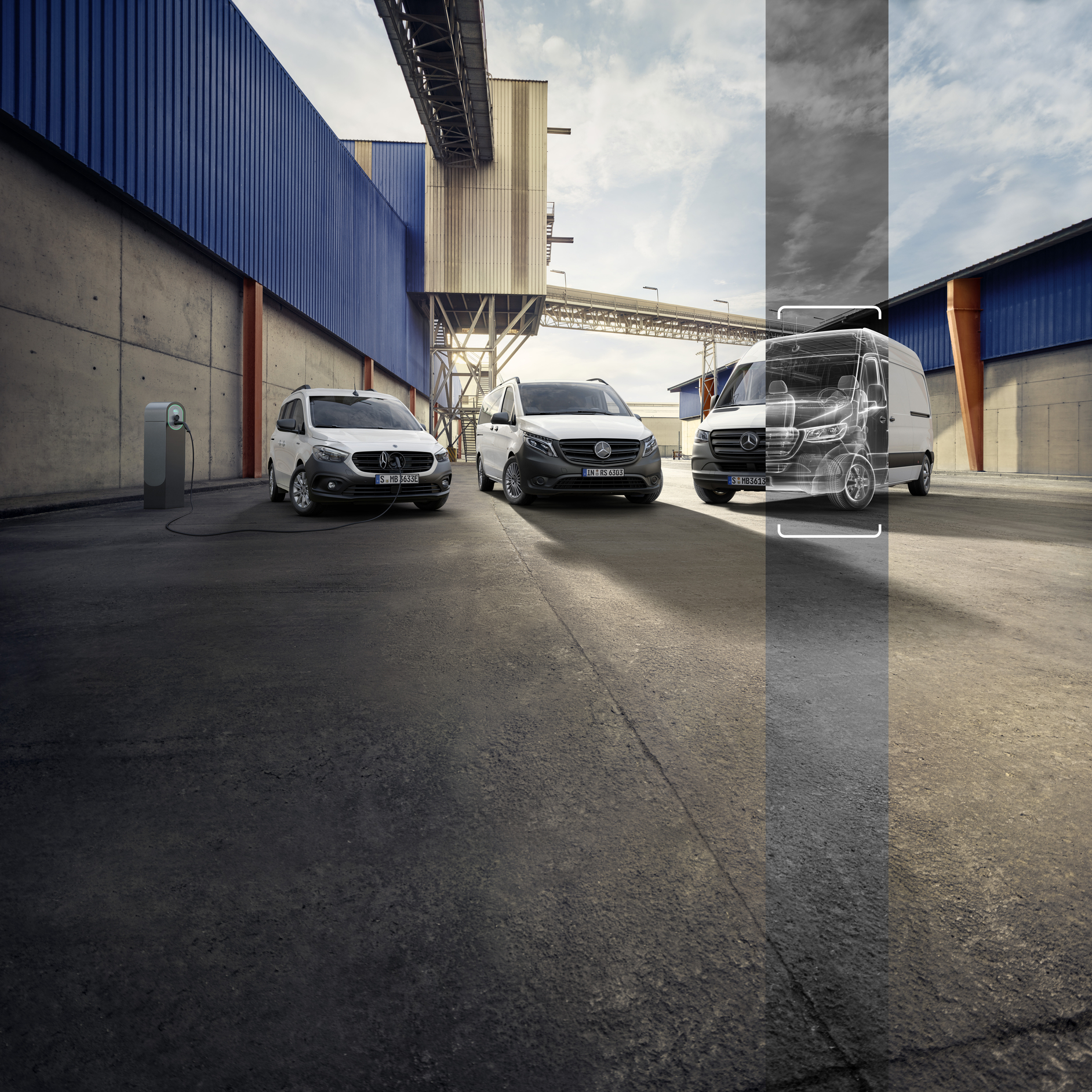
Three white Mercedes-Benz vans in an industrial setting background. One is charging, and the third is shown as a wireframe overlay.

Used van advantages
• Lower price
• Price may be more negotiable
• Easier to ‘self-customise’
• Usually available immediately

Used van disadvantages
• Shorter lifespan
• Potential for higher fuel usage
• Higher maintenance costs
• Potential for costly downtime
• Less likely to have active warranties

Drive with confidence, with Approved Used.

All Mercedes-Benz Approved Used vans come with a 12-month warranty* as standard, a free MOT test failure cover** and free 24/7 breakdown cover with roadside assistance, for life.

View approved used vans

Both new and used vans offer distinct advantages. Before you decide, you should consider which best fits your business needs and budget.

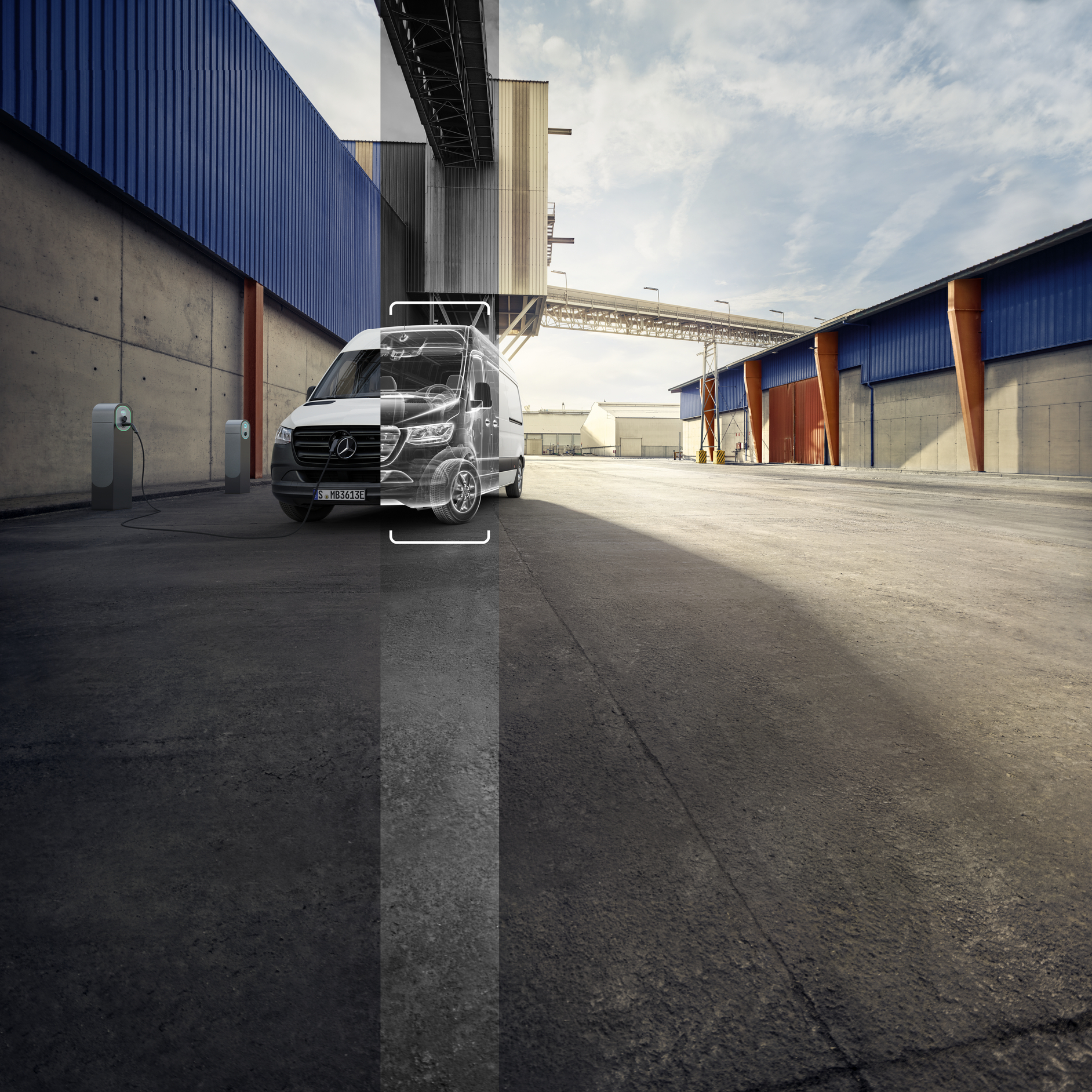
A white Sprinter van charging in an industrial yard, partially overlaid with a white wireframe technical drawing.

Additional features to consider when buying a commercial van.

Every detail counts when choosing your van. Here are some things to check when buying a van, so you can drive your business forward.

Cargo capacity
Just you and a few tools? Think smaller. Our Citan or eCitan could be ideal. Need more room to transport you, a crew and half of your local TradePoint? With its generous load space, our Sprinter and eSprinter models are popular among many businesses.

Van height and size
If you’re doing a lot of work around town, then a smaller van will be easier to park and more fuel efficient. But make sure it’s got the length to accommodate longer items like ladders and enough height and width to fit in bulkier items. Our vans come in a range of different heights and wheelbases, to cater for every business need. For specifications across the entire Mercedes-Benz van range, explore our van sizes & dimensions guide.

Weight
Driving an overloaded vehicle is not only unsafe, but illegal. So, before you buy it, it’s important to know the vehicle’s specifications and what its weight limits are. Here’s a brief rundown of the most commonly used terms:

Towing
Most petrol or diesel vans are capable of towing braked and unbraked trailers; however, if you tow regularly, a rear-wheel-drive may be a better option for you. If you’re thinking of going electric, you should know many e-vans are not allowed to tow trailers at all.

Fuel efficiency
From electric and hybrid, to petrol and diesel, your van’s running costs will largely depend on its fuel type. If you regularly drive in and out of cities with ULEZ, such as London, then fuel type will play an even bigger part in your overall running costs. Learn more about ULEZ here.

Safety features
You have health and safety policies at work, so shouldn’t your van be a safe place too? With our range you can rest assured you have the latest innovations to keep you safe while you drive. Like speed limit assistance, drowsiness and distraction monitors, and autonomous emergency braking*. What’s more, all Mercedes-Benz vans have been given a Euro NCAP five-star rating in 2025.**

*Our driver assistance and safety systems are aids and do not relieve you of your responsibility as the driver. Please take note of the information in the owner's manual and the system limits described therein.
**Excludes N2 Sprinter vans.

Optional extras
Do you need side-opening doors? Special colours to match your company branding? What about the ability to make calls from your cabin using Bluetooth? Would reversing cameras be helpful? Have a think about those little extras that you can’t do without – or opt for stripped-back basics. It’s your van, after all.

Choosing the right type of Mercedes-Benz van for your business.

Panel vans

By far the most popular choice of van on our roads, thanks to the wide variety of designs, sizes, roof heights and wheelbases available. Their flexibility makes them popular with buyers from all sorts of different trades. The standard panel van comes without side or rear windows, which aids both security and van livery options. But they’re also a popular base for van life or styling conversions.

Choose your panel van from the following Mercedes-Benz models:

Crew vans

As the name suggests, if getting to the job in hand involves transporting a team of more than three, plus their kit, then a crew van is often the answer. The larger designs will accommodate three people upfront, with a further three or four behind, plus extra loadspace in the rear.

Mercedes-Benz crew vans include:

Chassis cabs

The Sprinter chassis cab or crewcab can provide the basic foundation for the widest variety of custom builds – from box vans, to Lutons, dropsides, tippers and beyond. Whatever your commercial need, there’s generally a chassis cab option that can be tailored to meet it.

Find out more about Mercedes-Benz chassis cabs:

Dropside vans

If your business involves transporting large or awkwardly shaped items, then a dropside van is often the answer. This van type has a flatbed mounted onto the ladder chassis of a Sprinter chassis cab – and the dropsides allow for easy loading and unloading from multiple sides and angles.

Find out more about the Sprinter Dropside

Tipper vans

On a tipper van, the flatbed can be lifted from the front end using a hydraulic arm. This allows for the easy unloading of aggregates, sand and other loose materials. Combined with their robust build, it makes the Sprinter Tipper a popular choice within the building and landscaping industries.

Find out more about the Sprinter Tipper.

MPVs and people carriers

MPVs (Multi-Purpose Vehicles), also known as people carriers, are designed to be versatile – adept at transporting both people and cargo. The Vito Tourer can transport up to nine people in complete comfort, making it the ‘go-to’ option for taxi firms doing airport runs or taking the school netball team to an away match.

Find out more about the Vito Tourer and eVito Tourer.

Luton vans

Luton vans are similar in design to a box van, with the addition of extra loadspace above the driver’s cab. It makes them perfect for firms that need to transport lots of bulkier cargo, such as removal firms or local delivery companies.

Find our more about Mercedes-Benz Luton Vans.

Buying a new van through your business.

Many people, tradespeople in particular, wouldn’t be able to operate their business effectively without the use of a van. And buying a van through your business offers tax advantages. The amount you can claim back can differ, however, depending on whether you operate as a sole trader or a limited company.

Buying a van through a limited company can be straightforward, whereas purchasing a van as a sole trader may require you to take out loans and work with an accountant to understand exactly how much you can claim back.

In any event, all the paperwork must be in your company’s name and all the payments must go through your business bank account.

Discover our latest van finance offers

Buying a van for personal use instead? Take a look at the full Mercedes-Benz van range.

What are the tax benefits of buying a new van through a limited company?

Buying a van through a limited company will usually offer more tax advantages than if you’re buying as a sole trader. This is because vans count as plant and machinery for tax purposes, allowing you to claim up to 100% of the cost against your capital allowance. This means you can deduct the full price of the van from your company profits before calculating corporation tax.

And if your company is VAT-registered, you can claim back the VAT paid on the purchase. You may also be able to claim for other operating costs, including:

• Vehicle insurance
• Fuel
• Repairs and servicing
• Parking
• Breakdown cover
• Vehicle licence fees

Your new Mercedes-Benz van is ready and waiting for you.

You’ve chosen your van type. Decided on new or used. And worked out the most tax-efficient way to buy. So perhaps it’s time to take the last step. At Mercedes-Benz Vans, we deliver reliability, quality, the latest technology and lasting value – helping you work smarter and drive success with confidence across all your commercial needs. As soon as you’re ready to make your purchase, visit our Online Showroom to view available models, discover our latest offers and reserve online today.