A guide to everything you need to know about charging an electric van

Once you get into the habit, charging an electric van is not too different to charging your phone or laptop. Many drivers simply plug in overnight and start the day with a fully charged battery.


Our guide tells you about the different charger types, speeds and cables, how to charge your van at home, work or at a public charging point.

For an in-depth guide on electric vehicle terminology, visit our EV Glossary. And if you want to find out more on how to maximise your EV battery life, read our Electric Vehicle Battery Life Guide.
Mercedes-Benz electric vans charging specifications

What is the difference between AC and DC charging?

Electric vehicle chargers (or charging points) use either AC or DC power. How fast the van will charge is expressed in kilowatts (kW). The higher the number, the faster your van will charge.
 

AC (Alternating Current) power comes from the national grid. It’s the most common charging method, however because it needs to be converted in order to power the battery, it’s not the fastest. Most homes in the UK will be able to charge at 7.4 kW. For homes with three phase (generally new builds from 2020) you may be able to charge at 11 kW.
 

DC (Direct Current) charging, is much more powerful and provides a more constant charge – so it’s ideal for rapidly charging electric vehicles in as little as 30 minutes. Typically, chargers range from 50 kW to 100 kW however, some are rated at over 300 kW. The graphic tells you more about this and the type of connectors typically for each source.

Charging speeds. 

Whether it’s a wallbox charger installed in your home or a public charger at a supermarket or fuel station, the amount of power the charger supplies will determine how quickly it will recharge your van’s battery.


Slow charger

Most slow charging points are domestic plug points rated at up to 3.6 kW and generally takes over a day to fully charge an electric van. It is highly recommend that those who need to charge regularly, get a dedicated EV charging unit installed.


Fast charger

Fast chargers are rated at 7 - 22 kW. Most home chargers are rated at 7 kW. Some depots and public charging have three-phase electricity, which means vans can be charged at up to 22 kW - halving the charge time of an 11 kW unit, for example


Rapid charger

These are ideal if you need a quick top-up during your working day and are often found at motorway services, on main roads or in many other locations such as coffee shops or dedicated charging hubs. The most common type of rapid chargers provide DC power at 50-100 kW which means they’re capable of charging our latest electric vans up to 80% in as little as 30 minutes. All rapid chargers will have the right cable for your Mercedes-Benz.

What is difference between charging point connector types?

As electric vehicle technology has evolved, so have the number of charging connector types. Electric vehicles in the UK either have a Type 1 or Type 2 socket for slow/fast charging and CHAdeMO or CCS for DC rapid charging.
 

Fortunately, in the UK you should only ever have to use two connector types. If you buy a Mercedes-Benz van, you’ll currently use the Type 2 connector for AC slow/fast charging and the CCS for DC Rapid charging – the charging socket in your vehicle will connect to both. Let us explain more:
 

Type 1 connectors
While these are still popular in America, you’ll only find these 5 pin Type 1 connectors in older electric vehicles in the UK.

Type 2 connectors
These are the most common connector types in the UK, 7 pin Type 2 connectors. This is the type you’ll currently use when connecting a Mercedes-Benz eSprinter or eVito to a slow/fast charging point.

CCS
CCS (‘Combined Charging System’) is the most common connector type in the UK for connecting to rapid DC charging points. You will use a CCS connector with all our latest electric vans. It’s being phased in as the standard for all car brands in UK and EU.
 

CHAdeMO
This was the rival DC rapid charging connector type, and was common for Japanese brands. You’ll see CHAdeMO connectors at rapid charge points, but all new cars and vans are build with CCS.

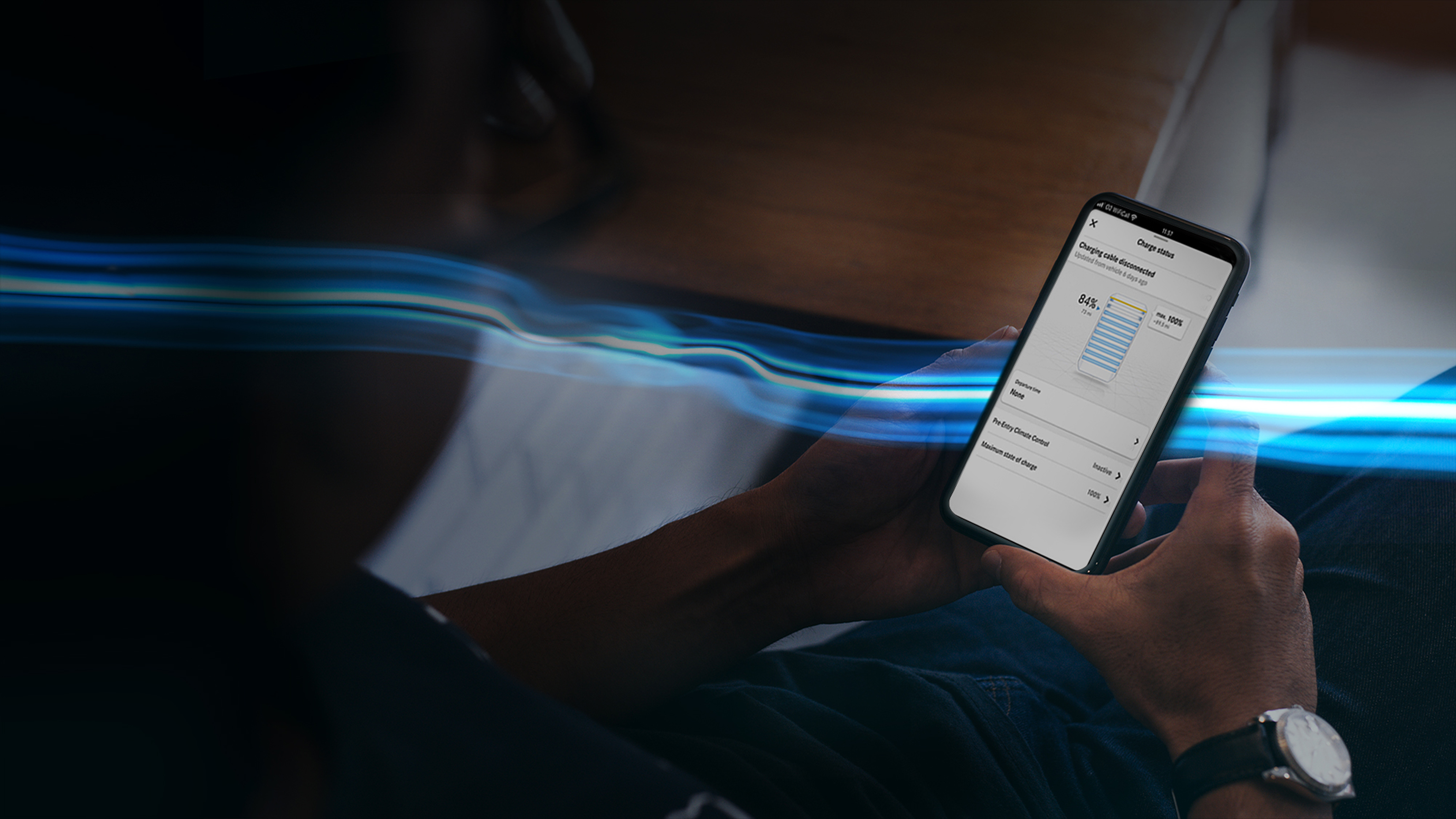
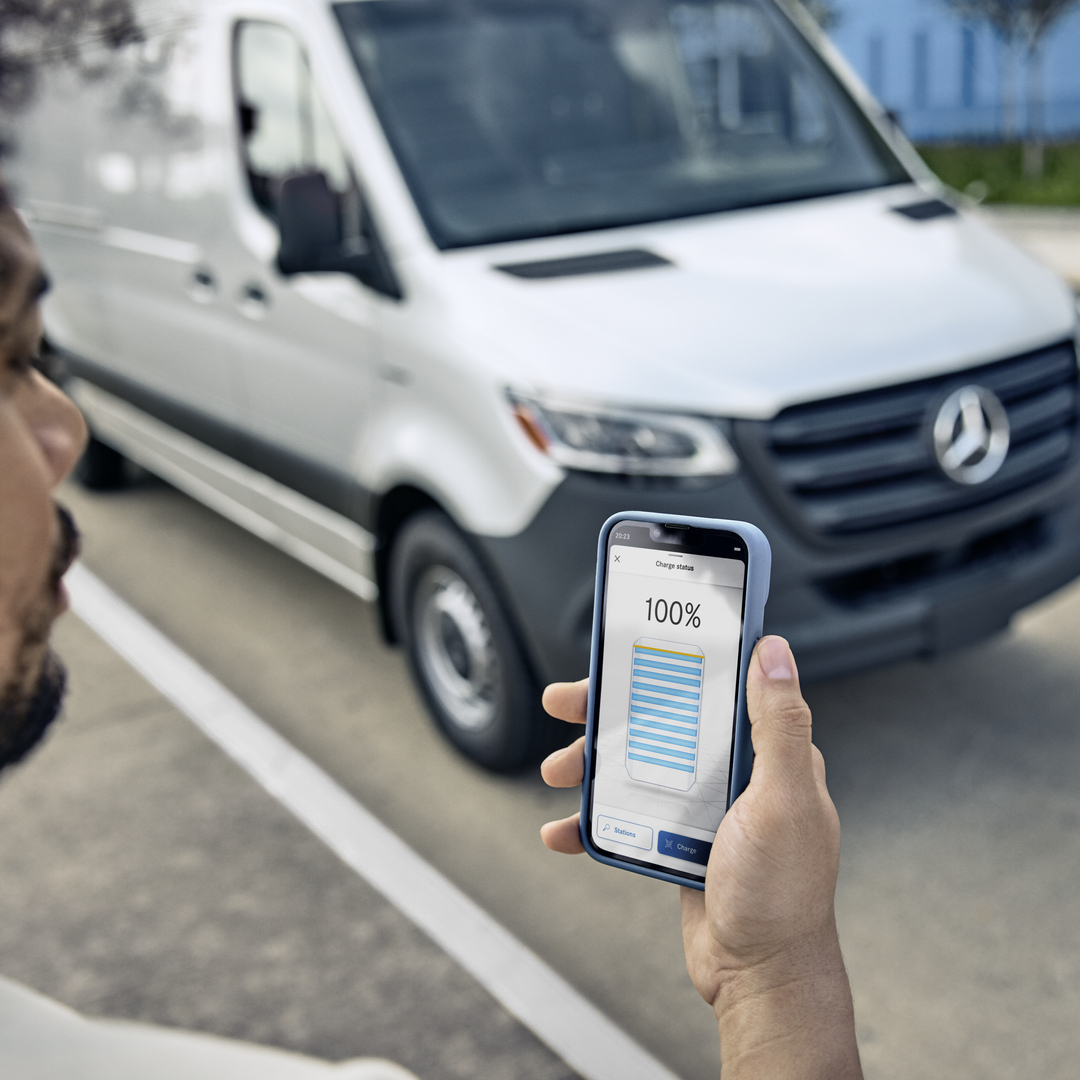
The Mercedes-Benz app makes remote charging simple and intuitive.

To keep your business moving you need to keep your electric vans charged and ready to go. The Mercedes-Benz app has many intelligent features including remote charging which enables you to monitor the charging levels using your smartphone and navigation features showing the location of public chargers on your route.

The Mercedes me app makes remote charging simple and intuitive

Your own charger means ease and flexibility
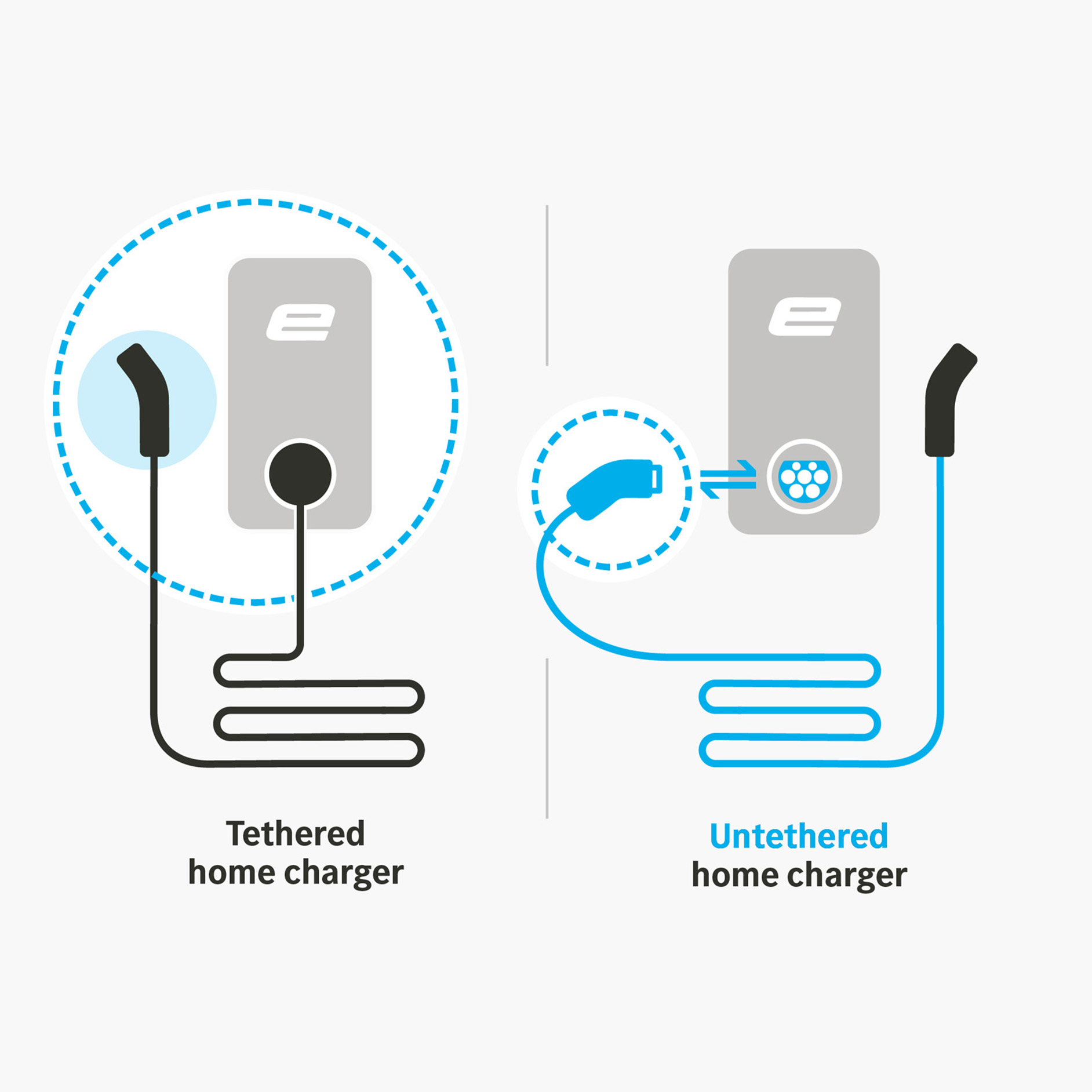
Our suppliers fit the latest generation of fast wallbox charge points with speeds of up to 7-11 KW. Their chargers also offer smartphone control via an app, enabling you to start, stop, and schedule your charging session remotely. Whichever one you choose, it will be compatible with all of our electric vans.

What’s included with your wallbox charger?
Choose a wallbox from either of our home charger partners and you’ll get everything you need to charge your electric van from the minute it’s installed. You’ll be able to select from a range of wallboxes equipped with WIFI and Bluetooth® connectivity, smartphone integration, warranty and weatherproof casing, so it can be installed inside or outside. Standard installation is included, but some homes will need a new isolator switch for safety – this is arranged with your local energy provider and our suppliers will help you if this is needed. The cost of the isolator switch varies by provider so is not included within our pricing (unless otherwise stated), we suggest allowing another few weeks if an isolator is needed so take this into account when arranging the handover of your new vehicle.
 

Electric van charger home installation
Getting your charger installed couldn’t be simpler. Once you’ve purchased your Mercedes-Benz electric van, your Dealer will contact one of our partner suppliers and arrange for them to contact you to arrange installation by a professional. They’ll speak to you about where you’d like the wallbox to be situated and the standard installation typically includes cabling, connecting, and mounting the unit. They’ll take care of everything from start to finish and provide a helpdesk service if you need advice at any point.

How to charge your electric van at public charging stations

There are now over 64,000 public charging points and the number is growing by the day – in fact, there are now more electric vehicle charging points than petrol stations, debunking the myth that there aren’t enough public chargers. You’ll find these at supermarkets, drive-thru restaurants, hotels, motorway service stations and many other locations. They’re easy to find online and as well as using Mercedes-Benz App (see above), you can also use websites such as Zap Map and Plugshare to see the nearest ones to you.
 

If you’re planning to top-up your van during your working day, you’ll probably want to find a rapid charger that’s on your route or near your site.

How much does it cost to use a public charger?

Some chargers are free, while others charge you for the electricity you use.
 

There are currently over 5,000 free public chargers, which are mostly the fast charging type and are typically found at visitor attractions, hotels and some supermarkets, so they may be ‘customer-only.
 

Paid public chargers are operated by over 30 different charging networks across the UK including BP Pulse, Pod Point and Instavolt. With new paid chargers you can just arrive and charge using your contactless credit or debit card.
 

However, for some older chargers, charge points did not allow you to pay directly by credit or debit card. Depending on the network, you'll either need to download their app, visit their website or use a pre-registered RFID card. So, if you need to use multiple chargers on different journeys, you’ll need to download the relevant apps or order a range of pre-registered cards. Just in case you were wondering, public chargers, don’t accept cash.
 

There is another benefit to using the provider’s payment system, many networks will offer you discounted charging for using their app or for a monthly subscription, often being a member of your commonly used charging networks will make ‘out and about’ charging easier.
 

Many councils are also making on-street chargers available for those without driveways. Some of these are free, while others have payment schemes for residents.

As we’ve mentioned above, your free Mercedes-Benz App makes it easy to find the closest charge points on your route, saving you time and optimising your range.

Discover more detailed information on electric vans