EV myth 1: They’re expensive to buy and maintain.

Upfront costs may seem higher, but when you factor in fuel and maintenance savings over time, electric vans represent better value for money. 

For starters, you won’t be charged to enter Low and Zero Emission zones. Plus, with fewer moving parts under the bonnet, your electric van will cost less to maintain than petrol or diesel ones.

When it comes to maintaining your vehicle, our Integrated Service Package covers your first four services*. And you’ll have the added peace of mind of a Battery Capacity Warranty for your EV.
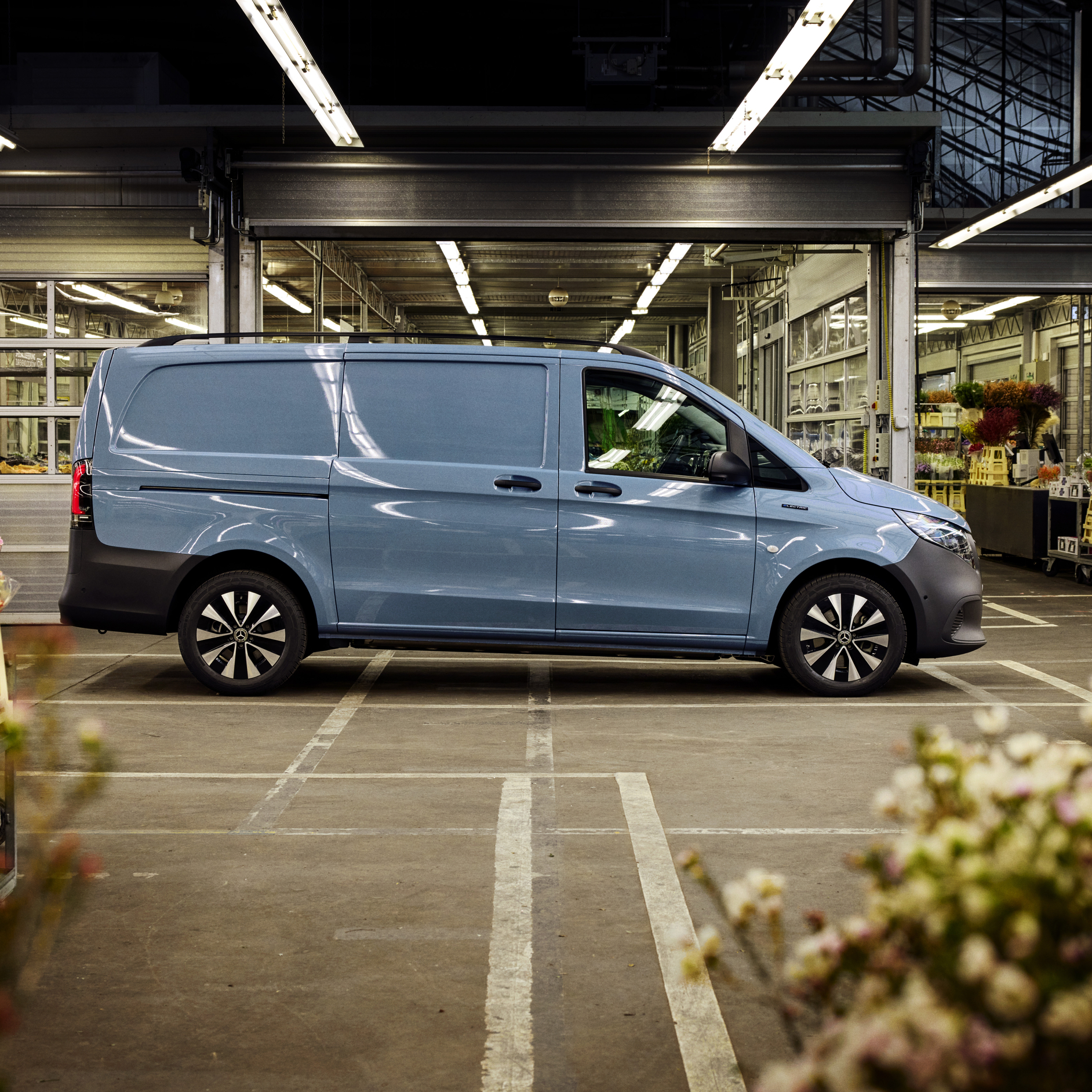
A side view of a blue Mercedes-Benz eVito van in a car park with an open building in the background.

Fuel running cost comparison table.

Here’s a snapshot of yearly fuel savings you could make:

*Within the first four years of ownership or up to a maximum of 100,000 miles, whichever comes first.

†Running costs are based on 10,000 miles per year, using diesel at £1.43/litre, electricity at £0.16/kWh, and 10% of EV charging assumed to be via public DC fast chargers. Fuel prices are based on RAC Fuel Watch as of 5ᵗʰ August 2025. Electricity prices are based on the average AC power tariff from the Office for Zero Emission Vehicles. Fuel and electricity prices are indicative and may vary depending on supplier, region and usage. Actual fuel costs for battery electric and plug-in hybrid vehicles will vary in line with battery energy degradation.

Costs are estimates for the base derivative and standard specification of the named models, based on test values (including WLTP combined consumption and range) and average inputs (including default fuel and electricity costs). Actual, real-world results will vary, and these figures should not be relied upon as definitive. These figures are indicative only and exclude other running costs (e.g. servicing and insurance), and may vary depending on usage, location and market conditions. Figures accurate as of 5ᵗʰ August 2025.

For personalised advice or further information, please consult your local dealer.

EV myth 2: EVs don’t have enough range.

More commonly known as ‘range anxiety’, this is a common misconception about electric vehicles. However, EV range myths like this couldn’t be further from the truth.

It’s a fact that electric vehicles have more than enough range to meet your daily needs. These days, you can realistically expect to get between 100 and 200 miles from a single full charge. According to a Mercedes-Benz study, the average commercial vehicle in Europe travels less than 62 miles a day. Hence, the majority of electric vans should meet the needs of most businesses.

In fact, approximately 96% of journeys can be made in our electric vans, as they offer a combined WLTP range from 159 miles up to 274 miles*. WLTP stands for ‘Worldwide Harmonised Light Vehicle Test Procedure’ – a measurement that aims to provide a realistic representation of a vehicle’s economy and emissions in everyday situations.

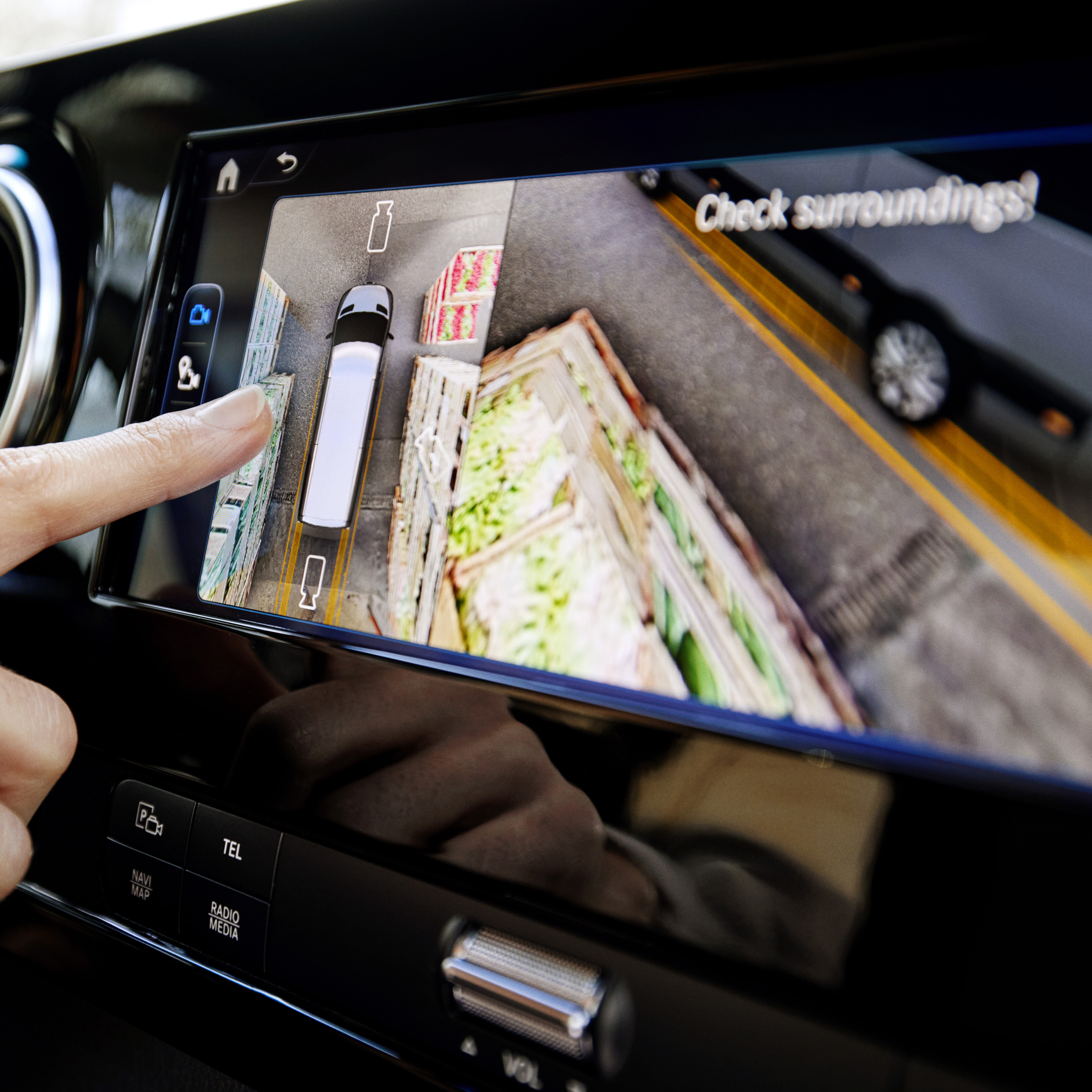
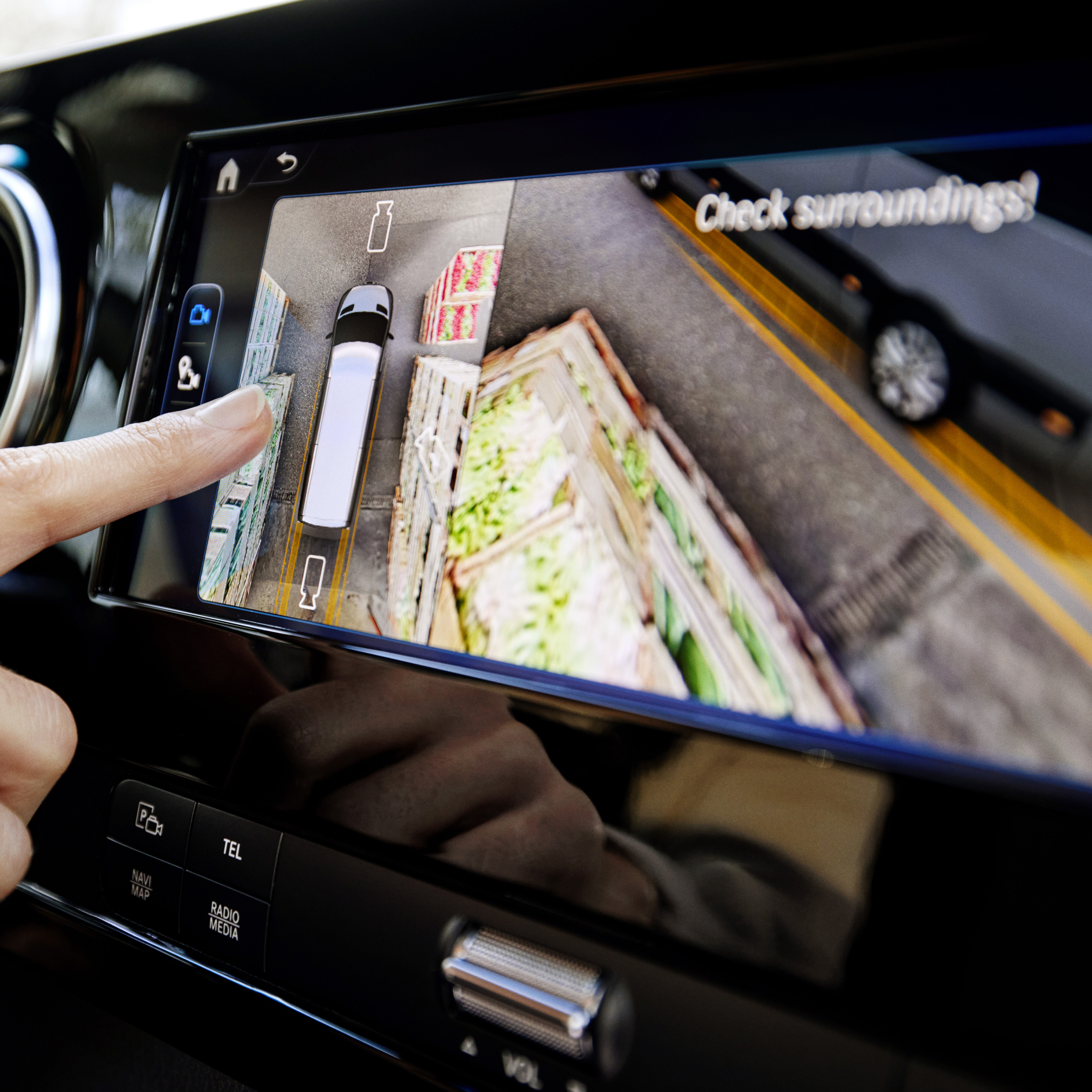
A finger on a vehicle infotainment screen showing a 360-degree top-down camera view.

Examples of ranges for Mercedes-Benz electric vans.

As EV technology advances, electric vans will be able to travel even greater distances on a single charge. Meanwhile, to maximise your range in today’s world, you can utilise regenerative braking, avoid carrying excess weight, maintain your tyre pressure – and make sure you get your electric van serviced regularly. With a Mercedes-Benz electric van, you have all the tools you need to help you maximise your range, including our integrated service package**, multiple recuperation modes to help recover energy whilst decelerating, and pre-entry climate control.^


*The indicated values were determined according to the prescribed measurement method – Worldwide Harmonised Light Vehicle Test Procedure (WLTP). Electrical WLTP range for the eSprinter Panel Van 81 kWh – 113 kWh in miles (km): 161 (259) – 272 (438). Electrical consumption in kWh/100 km: 28.0 – 34.6. Combined CO₂ emissions in g/km: 0. Electrical WLTP range for the eSprinter Chassis 81KWh – 113 kWh battery range in miles (km): 170 (273) – 274 (441). Electrical consumption in kWh/100 km: 28.0 – 32.7 Combined CO₂ emissions in g/km: 0. Electrical WLTP range for the eCitan 45kWh in miles (km): 162 (261) – 176 (283). Electrical consumption in kWh/100 km: 19.1 – 21.1. Combined CO₂ emissions in g/km: 0. Electrical WLTP range for the eVito Panel Van 60kWh in miles (km): 159 (256) – 160 (257). Electrical consumption in kWh/100 km: 26.4 - 26.5. Combined CO₂ emissions in g/km: 0. Electrical WLTP range for the eVito Tourer 90kWh in miles (km): 224 (362) – 228 (367). Electrical consumption in kWh/100 km: combined 27.0 – 27.4. CO₂ emissions in g/km (combined): 0. Figures determined with battery fully charged. Figures shown are for comparability purposes; only compare with other vans tested to the same technical procedures. Figures may not reflect real life driving results, which will depend upon a number of factors including the starting charge of the battery, factory-fitted options, accessories fitted (post registration), variations in weather, driving styles and vehicle load. Further information about the test used to establish range, power consumption and CO₂ figures can be found here. For real time data, click here.
**Within the first four years of ownership or up to a maximum of 100,000 miles, whichever comes first. 
^Optional equipment depending on configuration.

EV myth 2: EVs don’t have enough range.

More commonly known as ‘range anxiety’, this is a common misconception about electric vehicles. However, EV range myths like this couldn’t be further from the truth.

It’s a fact that electric vehicles have more than enough range to meet your daily needs. These days, you can realistically expect to get between 100 and 200 miles from a single full charge. According to a Mercedes-Benz study, the average commercial vehicle in Europe travels less than 62 miles a day. Hence, the majority of electric vans should meet the needs of most businesses.

In fact, approximately 96% of journeys can be made in our electric vans, as they offer a combined WLTP range from 159 miles up to 274 miles*. WLTP stands for ‘Worldwide Harmonised Light Vehicle Test Procedure’ – a measurement that aims to provide a realistic representation of a vehicle’s economy and emissions in everyday situations.

dummy

EV myth 3: There aren’t enough EV charging stations.

Similar to the range anxiety mentioned above, this EV myth is known as ‘charging anxiety’ – and it’s a common misconception. As of June 2025, there are over 80,000 charge points installed in 39,773 locations by May 2025 across the UK. This is a 30% increase from the same period in the previous year.

So it’s easier than ever to charge your electric van while you’re on the move – and this is just the beginning. The UK government is committing £1.3 billion towards improving the charging infrastructure.

When it comes to locating charging points, Mercedes me Charge integrated into the Mercedes-Benz App, can help you do just that while you’re out on the move. Get access to thousands of public charging stations from various providers for your van. Whether in the city, on a country road or on the motorway – Mercedes me Charge makes it easy to find the nearest suitable charging station. Once activated, the charging process can be started via the MBUX multimedia system, the Mercedes-Benz App or a Mercedes me Charge charging card. Thanks to your charging contract with Mercedes me Charge, you will be billed automatically every month, regardless of the charging station provider.

You can also install workplace charging stations – or even have one in your home. There are grants and exemptions available to help facilitate this. Search ‘electric vehicle chargepoint grant’ or ‘Workplace Charging Scheme’.

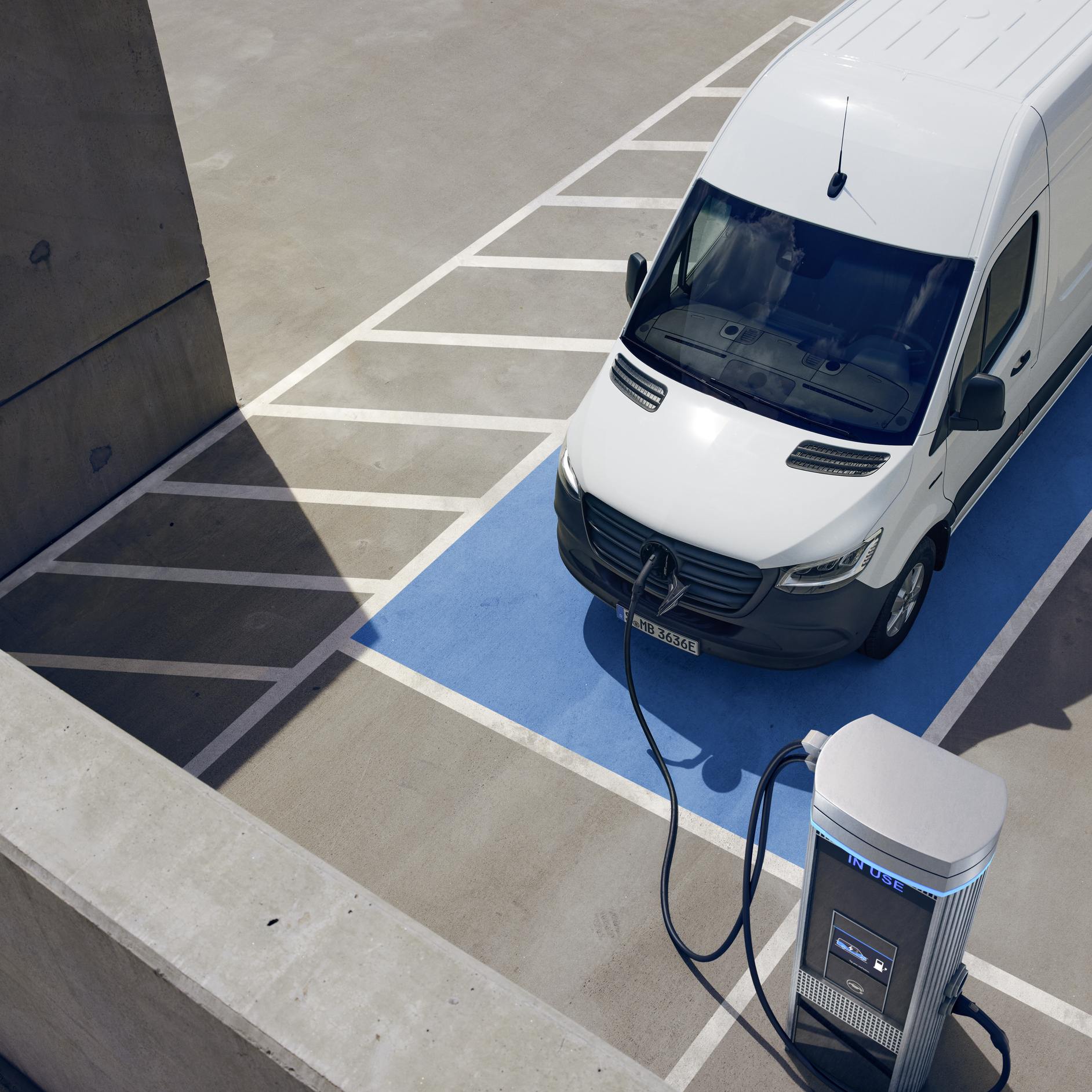
An elevated view of a white Mercedes-Benz van parked and charging at an electric vehicle charging station.

[a]The use of the Digital Extras requires the permanent acceptance of the Terms of Use for Digital Extras and the Mercedes me ID Service Terms in their applicable versions, the permanent pairing of the vehicle with the Mercedes-Benz user account and - if applicable - the activation of the Digital Extras. Upon expiry of the term, the Digital Extras can be renewed for a fee in the Mercedes-Benz Store provided they are still offered for the corresponding vehicle at that point. In addition, for the use of some Digital Extras there may be further usage requirements or limitations specifically separate customer-owned contracts with third parties (e. g., streaming, charging, conclusion of a data contract covering comfort data volume), selected third-party products (e.g. smartphone, smartwatch) or they are only available for specific customer groups. Alternatively to comfort data volume, depending on the generation of your multimedia system, data volume must be available via Internet in the car or, where possible, your own data volume will need to be used via tethering. Information on personal data processed for the use of Digital Extras may be found in the Digital Extra privacy policy.

The connection of the communication module to the mobile network, including the emergency call system, depends on the respective network coverage and availability of the network providers.

[b]A separate charging contract with a selected third-party provider is required to use the "Mercedes me Charge" Digital Extra, which is used for payment and billing of the charging processes. To use the Digital Extras, you must have a personal Mercedes-Benz ID and accept the Terms of use for the Digital Extras.

[c]To use Plug & Charge, you must also activate the "Plug & Charge" service for vehicles with the appropriate technical equipment.

Learn more about electric van charging

EV charging for your fleet.

Some may say that the task of keeping your electric van fleet charged and ready for business is costly and complicated. However, the truth is much simpler. First, decide what type of charging stations you want to install in your workplace (and don’t forget the Workplace Charging Scheme).

Slow chargers are perfect if your vehicles return to your workplace and remain there for long periods – for example, overnight. For fleets where vehicles have limited downtime, fast chargers are preferable. For large, busy fleets where maintaining fully charged vehicles is vital, choose rapid chargers.

EV charging at home.

If you park your van at home overnight, a slow charger is ideal. It’s ready to go when you leave in the morning – and you avoid daytime charging, which eats into your working day.

Charging times for our vans.

Whenever it’s time to charge your vehicle, whether that’s back at base or out on the road, our efficient charging times mean that your electric van need never be off the road for longer than necessary.

EV myth 4: The batteries are unsafe and unreliable.

EV myth 5: They’re not good for the environment.

From concerns about batteries ending up in landfill to the environmental damage done by mining rare earth metals, there’s a range of objections to electric van production. At best, these are overstated; at worst they are simply untrue.

Are electric vehicles better for the environment, or not? Well, they are in terms of driving emissions. Unlike petrol or diesel vans, they emit zero tailpipe emissions – so, no CO2 or NOx. And while charging produces emissions, the fact is that these are significantly lower than those associated with the use of petrol or diesel models.

As far as many of our growing fleet of commercial van owners are concerned, their electric vehicle’s environmental impact can only be positive – and switching to electric is better for business too. You can read the facts behind the story here.

However, in spite of this shift in attitudes, many EV myths about their environmental credentials remain.

A man holding a bunch of radishes while loading crates of produce into a white Mercedes-Benz van.

The facts of rare earth metal mining.

It’s certainly true that this is necessary to produce the lithium-ion batteries at the heart of our electric vans. However, we strive to create a closed-loop, circular process where materials are reused, repurposed or recycled. This allows raw materials and energy to be saved while reducing the amount of waste. Recycling is a last resort – but even then, our goal is a recovery rate of 96%. So to answer the question ‘are electric vehicles sustainable?’ the answer is certainly yes.

Nevertheless, the EV myth that electric van production is energy-intensive persists. However, the lifecycle emissions and carbon footprint of our electric vans are far lower than our petrol and diesel models.

Since 2023, Mercedes-Benz's own vehicle production sites have been net carbon-neutral.* In our “Ambition 2039” we have set ourselves the target of making our fleet of new vehicles net carbon-neutral* along the entire value chain and over the vehicles 'entire life cycle by 2039. This includes the ambition for all Mercedes-Benz production plants worldwide to run 100 percent on renewable energy with zero CO₂ emissions by 2039.

*Net carbon-neutral means that carbon emissions that are not avoided or reduced at Mercedes-Benz are compensated for by certified offsetting projects. Discover more at:https://group.mercedes-benz.com/sustainability/environment-climate/decarbonisation/ambition-2039-our-path-to-co2-neutrality.html

EV myth 6: The National Grid can’t support widespread EV use.

This common misconception wrongfully assumes that the world is going to switch to electric vehicles overnight, causing an impossible demand for electricity. The fact is, this process will happen gradually, giving the National Grid plenty of time to meet this increase in demand.

This future-proofing is necessary, of course, but according to the National Grid’s estimates, even if that overnight switch were to happen, demand for electricity would only increase by 10% – well within the range the grid can capably handle.

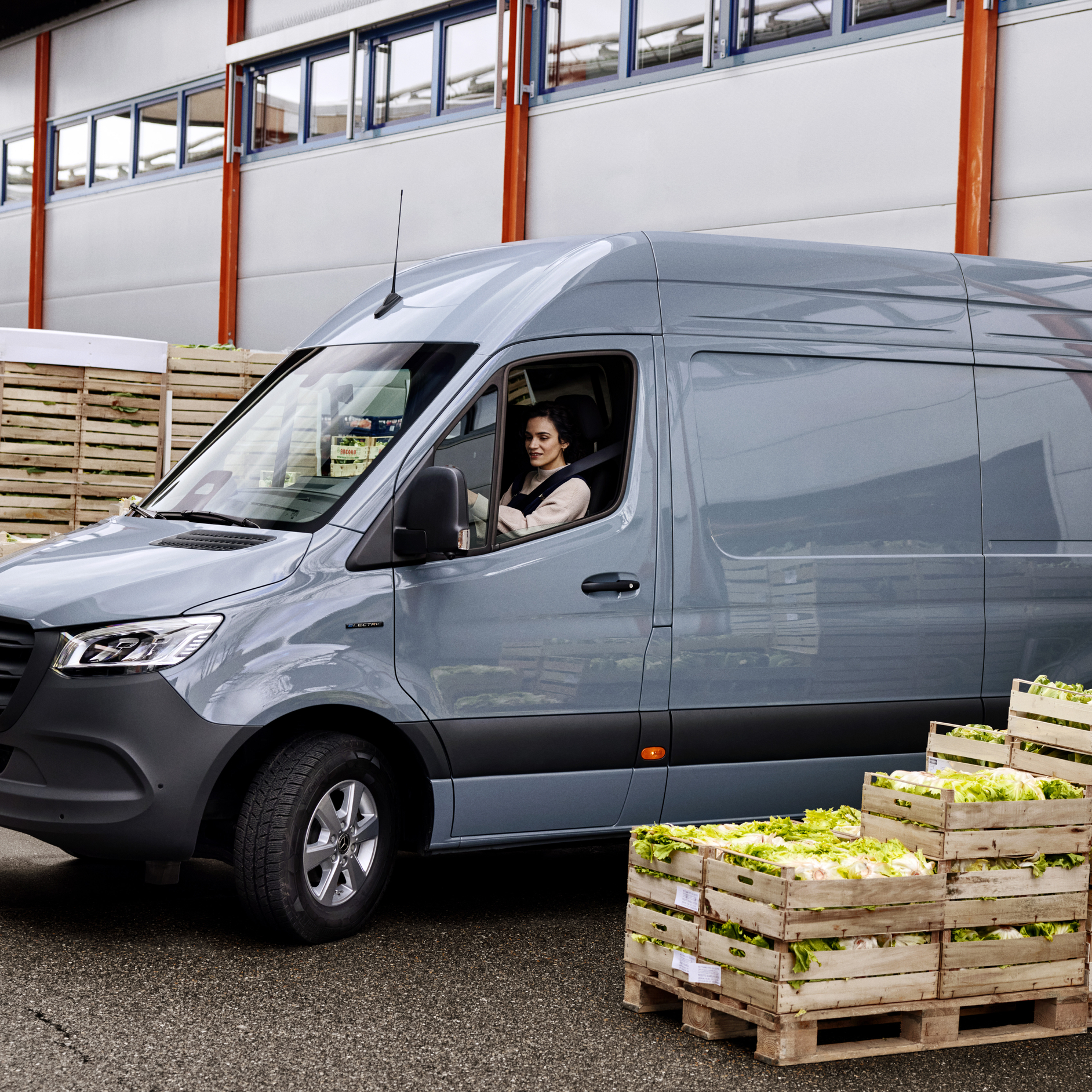
A woman sitting in the driver's seat of a grey Mercedes-Benz eSprinter van next to crates of lettuce.

Test drive innovation

Discover for yourself how an efficient, flexible and technology-packed Mercedes-Benz electric van can help you support a more sustainable future and drive your business forward.

Test drive innovation.

Discover for yourself how an efficient, flexible and technology-packed Mercedes-Benz electric van can help you support a more sustainable future and drive your business forward.

‏‏‎ ‎Discover our electric van range.

‏‏‎ ‎With the major EV myths debunked, feel free to explore the Mercedes-Benz electric van range, along with the options available to you.