Everything you need to know to prepare for your next van MOT.

This guide covers your legal obligations around the MOT test, what’s involved, the inspection criteria, the most common reasons for failure and what steps you can take to prepare.

It also offers actionable advice for maintaining your van’s roadworthiness year-round. Using an Authorised Mercedes-Benz Service Centre for your servicing, repairs and MOTs can help you prepare confidently for the test and avoid costly failures.

Don’t forget, your local Dealer is always happy to offer MOT advice and help you find a nearby test centre.
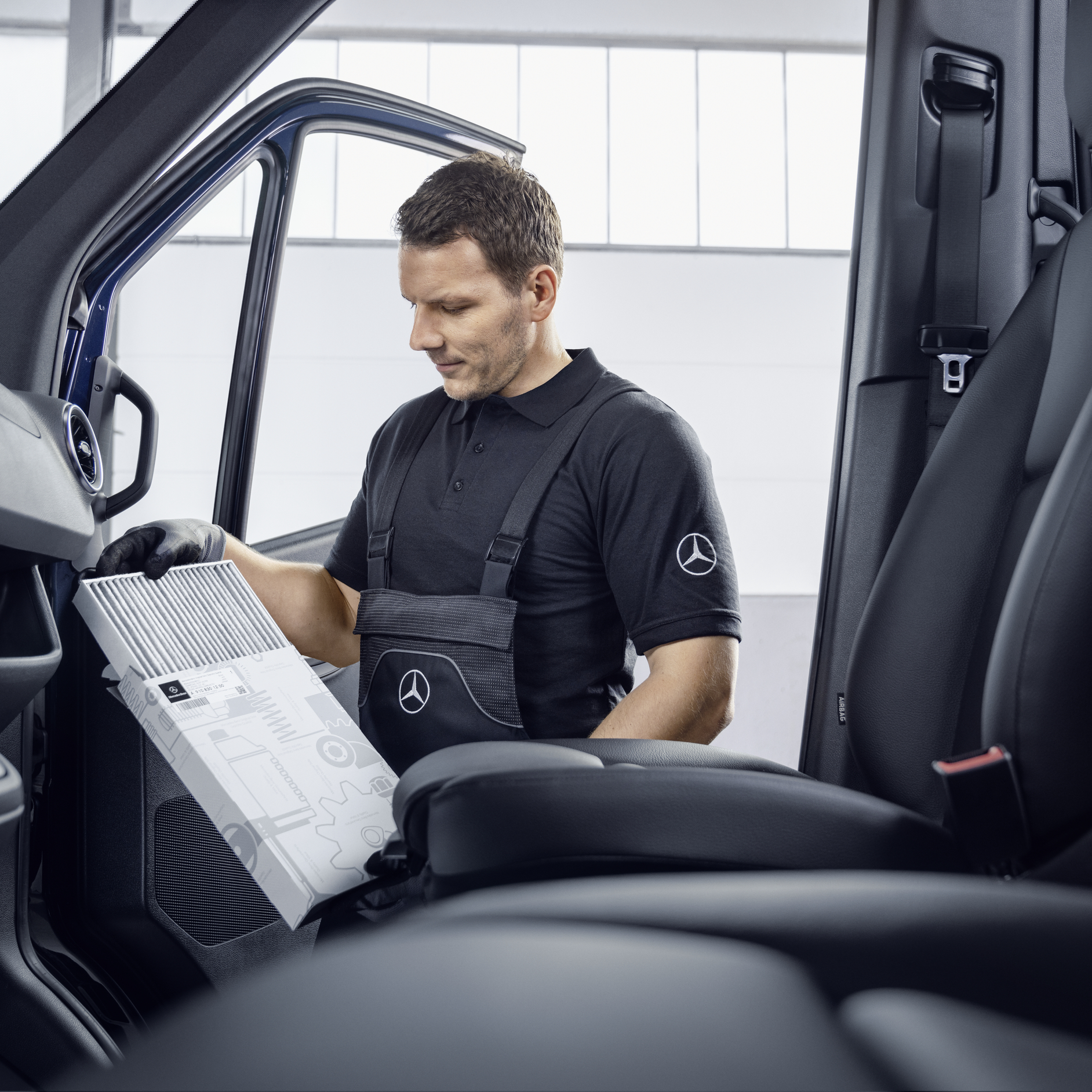
A technician in black uniform examining an air filter in the cabin of a blue Mercedes-Benz van.

What is a van MOT and why is it important?

Just like a car, if your van is over three years old and used on public roads, it will need an MOT certificate.

The van MOT is a test required by the Driver and Vehicle Standards Agency (DVSA) to ensure your van is safe and legal to drive.

The only exception to needing an MOT certificate is if your van is parked on private property and not being driven.

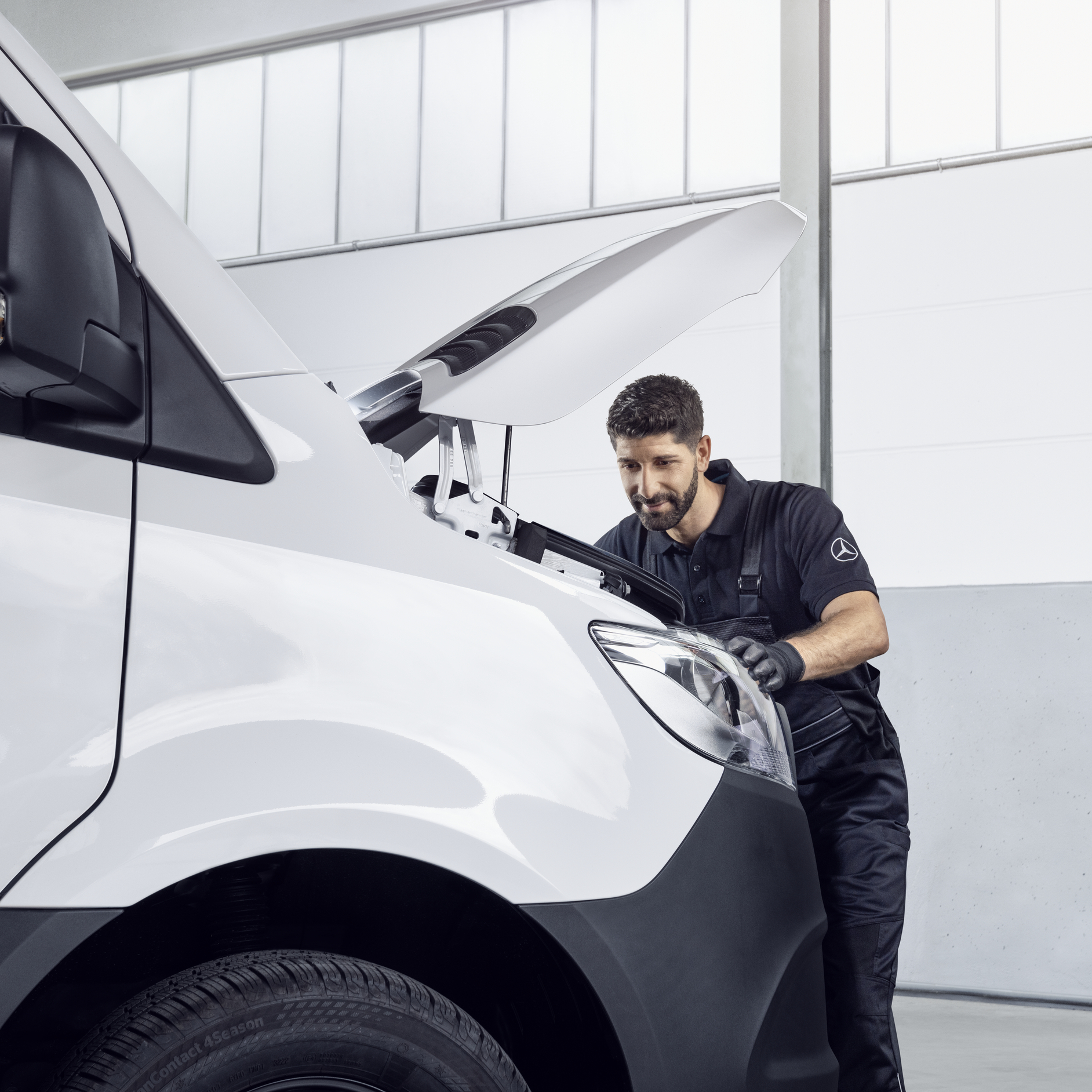
A technician inspecting the engine bay of a white Mercedes-Benz van with the bonnet open.

Do vans need a different MOT to a car?

Most vans will fall into Class 4 for MOT testing purposes. This is the same category as passenger cars, which means your van can be tested in the same way and at the same test centre as a car. Some of the most popular Mercedes-Benz vans fall into this category, including the Citan Panel Van, Vito Crew Cab and Sprinter Tipper.


Vans that need a different test include:

Do vans need a different MOT to a car?

Most vans will fall into Class 4 for MOT testing purposes. This is the same category as passenger cars, which means your van can be tested in the same way and at the same test centre as a car. Some of the most popular Mercedes-Benz vans fall into this category, including the Citan Panel Van, Vito Crew Cab and Sprinter Tipper.

Vans that need a different test include:

How do I know which MOT class my van is in?

Whether your van needs a Class 4 or Class 7 MOT will depend on its gross weight. That's the weight of the van plus the maximum amount of weight it’s allowed to carry.

If the van’s maximum gross weight is less than 3,000 kg, it'll fall into Class 4. If its maximum gross weight is between 3,000 kg and 3,500 kg – like some Sprinter and eSprinter models – it'll fall into Class 7.

While the test for a Class 7 van is a little different and slightly more costly, the principles are basically the same – to ensure your van meets the required safety standards.

A technician with a digital tablet standing next to the open door of a white Mercedes-Benz van.

How much is a van MOT?

The maximum you should pay for an MOT test on a Class 4 van is £54.85* and £58.60* for a Class 7 van. MOT test centres are bound by these maximum prices, which are set by the DVSA. Test centres may sometimes charge less, for example when they’re running a promotion.

There are likely to be additional costs if your van fails the test and needs work to pass. You'll have to pay for the parts and labour, but a retest within 10 working days is free if you leave your van at the same test centre to have the work done.


*Prices accurate at September 2025. Please check the gov.uk website for latest pricing.

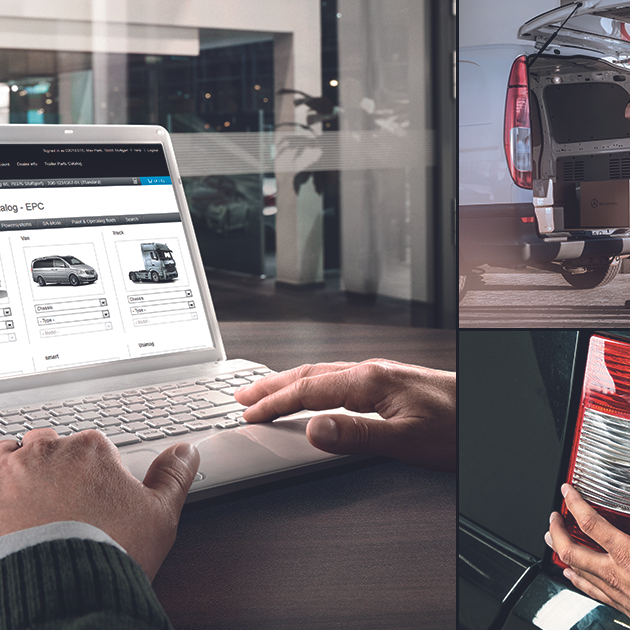
A person using an online parts catalogue, a delivery van, and a person fitting a rear light.

What happens if my van is overdue an MOT test?

If your van's MOT has expired, then you can only drive it if you're going directly to a garage for a test, a retest or for repairs necessary to get it through the test. If you're stopped by police, you may need to prove you have an appointment with the garage.

If you drive the van for any other reason without a valid MOT, then you could be fined up to £1,000 and your van could be impounded.

A technician using an impact wrench to change a tyre on a vehicle raised on a lift

What are the main reasons for failing an MOT test?

According to government figures, in 2023-24 29% of Class 4 vehicles and 36% of Class 7 vehicles failed their initial MOT checks.

For Class 4 vehicles, the most common reasons were:


• Problems with lights and signalling equipment.

• Suspension issues.

• Brake defects.

• Defective tyres.

• Issues affecting the driver's view of the road.

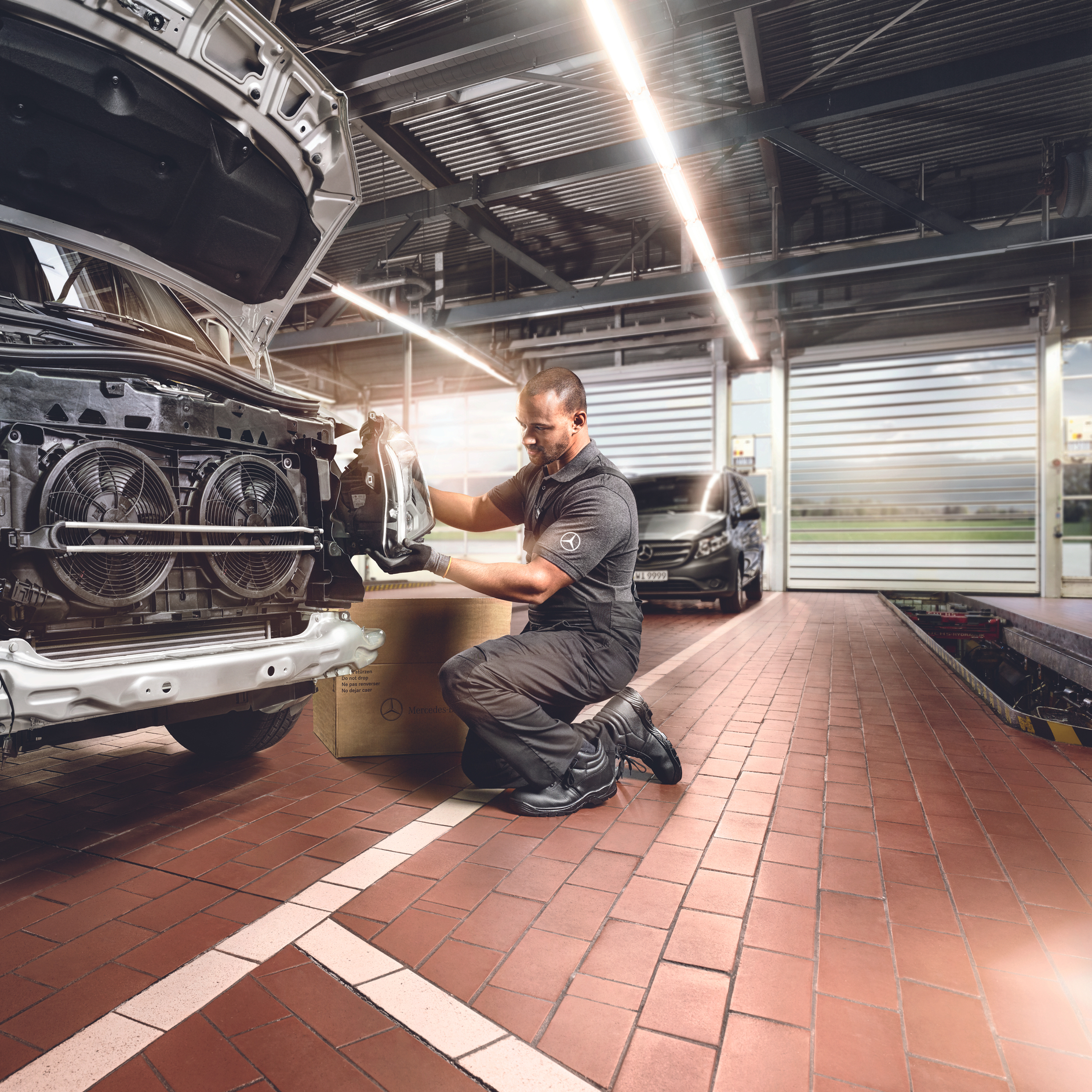
A technician installing a part onto the exposed front end of a van.

What should I do if my van fails its MOT?

If your van fails its MOT test, you'll be given a document which identifies the issues that need to be fixed. This is known as an MOT refusal or VT30 form. You cannot drive the van until the identified faults are fixed.

You now have two options:

• You can leave the van at the test centre to be fixed. This will only require a partial retest, which will be free if it's done within 10 working days.

• You can take it away for repairs, carried out by yourself or another mechanic. Returning it to the original MOT garage for a partial retest the next working day should be free of charge. Otherwise, you can take it back within 10 working days for a reduced fee.

How can you best prepare for a van MOT test?

To give your van the best chance of passing its MOT, here are some checks you can perform yourself beforehand:

Check the lights – get someone outside the van to confirm all your lights are working properly, including headlights, rear lights, reversing lights, fog lights, brake lights, indicators and hazard lights.

Check the wheels and tyres – inflate your tyres to the recommended pressure and make sure the wheel bolts are tightened. Check for any damage, and that each tyre has the minimum legal tread depth. There’s a simple way to do this using a 20p coin – visit the RAC’s website for full details.

Check the windscreen and wipers – check for chips on the windscreen that may affect visibility. Check the screenwash levels and turn on the wipers on to make sure they're clearing the windscreen effectively.

Check the other fluid levels – check the levels of engine oil (between ‘min’ and ‘max’ on the dipstick), brake fluid, power steering fluid and coolant.

Check your van’s exterior – all the bodywork should be in good condition and free of rust or anything that could come loose. Also, a timely wash will ensure good all-round visibility and that your number plates are clearly visible.

Check the seatbelts – make sure they all fasten and release properly.

A technician installing a new brake disc onto a vehicle.

How to keep your van MOT-compliant all year round?

The best way to make sure your van is safe and in a good state of repair throughout the year is to have it serviced regularly at a Mercedes-Benz Authorised Service Centre.

A routine service carried out by our expert technicians will often cover many of the same checks performed in an MOT test. It gives your van the best chance of passing first time, helping you to avoid the costs of last-minute repairs and retests.

A Mercedes-Benz service advisor in glasses talking on the phone at his desk with a white van in the background.

Frequently asked questions.

There are no hard and fast rules about whether a Class 4 vehicle should be completely empty to be MOT tested. However, there are a few things to bear in mind:

The tester needs to be able to access all the areas of the vehicle they need to test. So try to avoid any unnecessary clutter or equipment in the cabin or cargo area.
The tester should be able to carry out the test without risk to themselves. If a tester considers an unsecured load presents a risk, they can refuse to test unless the load is secured or removed.
The test can be refused if the vehicle or equipment is so dirty that it makes examination unreasonably difficult. So a thorough clean before the test is always a good idea.

An engine warning light doesn’t automatically mean an MOT fail. However, it can sometimes flag an underlying problem that may cause the van to fail other parts of the MOT, such as excess emissions or faulty safety systems.

So it’s worth getting it checked out as soon as possible at a Mercedes-Benz Authorised Repair Centre, to maintain your van’s general roadworthiness and avoid any potential MOT failure.

Your van’s MOT certificate is valid for 12 months. You can book your next MOT up to a month (minus a day) before the current one runs out and still keep the same renewal date for the following year. This will help to ensure that your van has a constantly up-to-date certificate, avoiding any potential time off the road for your van, or legal penalties for your business.