Why buy a used van?

For many businesses, buying a used van offers clear commercial advantages. The most immediate benefit is a lower upfront cost compared to buying a new van, allowing you to access higher‑spec models or expand your fleet more affordably. Used vehicles also experience slower depreciation, meaning their value remains more stable over time.

Availability is another key factor. While new vans may involve factory lead times, used vans are typically ready to drive away, helping businesses stay operational without delay.

There are also important VAT considerations when buying second hand vans. Depending on how the vehicle is sold, VAT may not always be reclaimable, which can influence overall cost planning.

With a wide range of models, specifications and body styles available, the used market provides flexibility for businesses at every stage, from sole traders to growing fleets.

Setting your budget before you start:

Before buying a used van, it’s essential to look beyond the purchase price and consider the total cost of ownership. This ensures you choose a vehicle that remains affordable throughout its lifecycle, not just at the point of purchase.

Purchase budget.

Start by setting a clear maximum budget before beginning your search. Understanding how much you can realistically spend helps narrow your options and prevents overspending.

When considering how much are used vans, prices can vary significantly depending on age, mileage, condition and specification. Newer vans with lower mileage typically command higher prices, while older models may offer better value but require more maintenance.

For business owners, VAT may apply when purchasing used vans depending on how the vehicle is sold, so it’s important to factor this into your overall budget.
A man with glasses and a grey shirt working on a silver laptop at a desk in an office.

Van running costs.

Ongoing costs are a crucial part of ownership. These include insurance, Vehicle Excise Duty (VED), servicing, tyres, fuel and general maintenance. Vans are often used more intensively than cars, which can lead to higher wear and tear over time.

You should also consider environmental compliance, particularly if you operate in urban areas. Ensuring your van meets emissions standards can help avoid additional charges in low‑emission zones.

To better understand these costs, explore resources such as:

Van tax guidance for UK drivers
Electric van running cost comparisons
Maintenance and servicing support

Planning for these expenses ensures your van remains a reliable asset rather than an unexpected financial burden. For businesses considering a Mercedes-Benz used van, service and maintenance plans such as ServiceCare can also help provide greater visibility over ongoing maintenance costs, making budgeting and fleet planning more predictable.
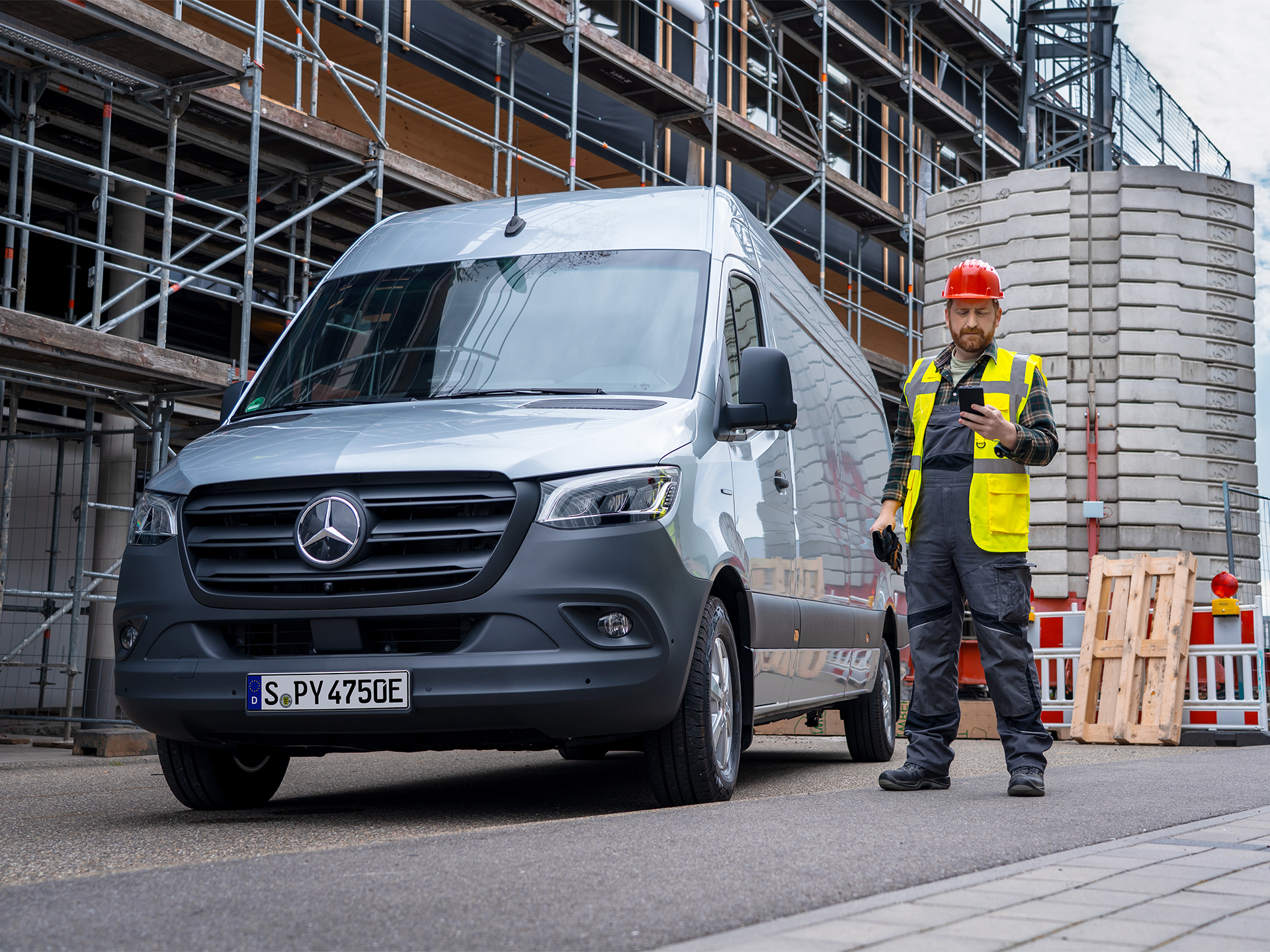
A construction worker in a red hard hat and high vis vest looking at a phone next to a silver Mercedes-Benz van parked at a building site.

Finance options.

If paying upfront isn’t the right option, finance can help spread the cost of buying a used van. Many buyers choose this route to manage cash flow more effectively.

You can explore available options through Mercedes-Benz Financial Services to understand what plans may suit your business needs and budget.
A man and a woman looking at a tablet together in front of a grey Sprinter van.

Choosing the right type of used van:

Selecting the right van type is essential for efficiency, productivity and safety. The size and configuration you choose should reflect how you use your vehicle day to day.

Vans are generally grouped into three main categories:

  • Small vans – Ideal for urban driving and lighter loads (e.g. Citan vans)
  • Medium vans – Versatile for mixed use and growing businesses (e.g. Vito vans)
  • Large vans – suited for heavy-duty transport and bulkier goods (e.g. Sprinter vans)

There are also specialist configurations such as crew vans for transporting both people and tools, or Luton vans for large-volume loads.

Key considerations include payload capacity, wheelbase and roof height. Exceeding payload limits can impact safety, increase wear and even affect insurance validity. Likewise, choosing the right wheelbase and roof height ensures your van is practical for loading, access and storage.

Before deciding, assess what you transport most often and how frequently you use the vehicle. Reviewing detailed van sizes and dimensions can help ensure the model you choose meets your operational requirements.

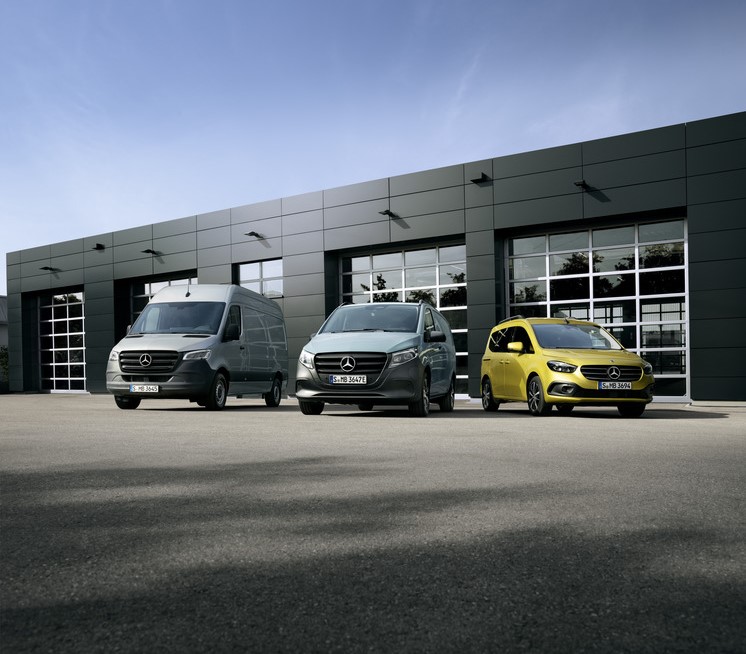
A grey Sprinter, a light grey Vito, and a yellow Citan parked in front of a modern building.

What to check when buying a used van.

When buying a used van, a thorough inspection is essential. Commercial vehicles are often subjected to demanding workloads, so it’s important to identify signs of wear or damage early.

Mercedes‑Benz Approved Used vans are prepared to strict standards before sale, giving buyers additional confidence. However, whether buying privately or through a dealer, the following checks are key.

Vehicle history and legal checks.

Before committing to a purchase, it’s essential to check van history to avoid financial and legal risks.

A vehicle history check can reveal:

• Outstanding finance agreements
• Insurance write-off status
• Stolen vehicle records
• Mileage discrepancies

You should also review the MOT history online to identify recurring advisories, which may indicate ongoing issues.

Always verify the Vehicle Identification Number (VIN) matches the V5C logbook and confirm that ownership details are accurate. These checks help ensure the van is legitimate and free from hidden complications.
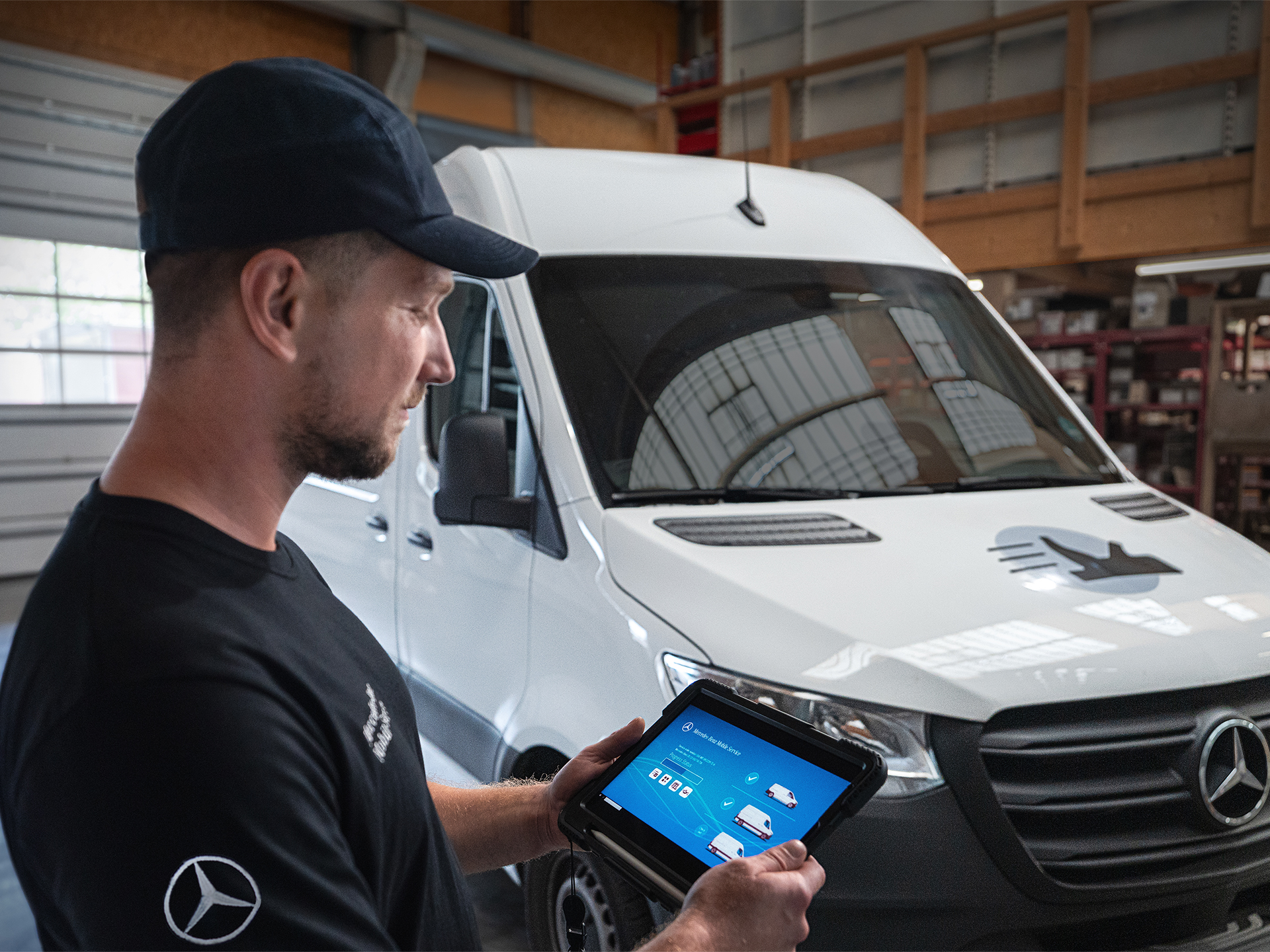
A technician in a black cap and shirt looking at a tablet, with a white Mercedes-Benz van parked behind him in a workshop.

Next steps after you buy your used vehicle.

Once you’ve completed your purchase, there are a few important steps to take before getting on the road.

Arrange insurance in advance, as this is a legal requirement. You’ll also need to tax the vehicle and ensure the V5C logbook is correctly transferred into your name.

If the service history is unclear or incomplete, booking a professional service is a sensible step to ensure everything is in good working order.
A close up of two people shaking hands over the bonnet of a dark Mercedes-Benz van.
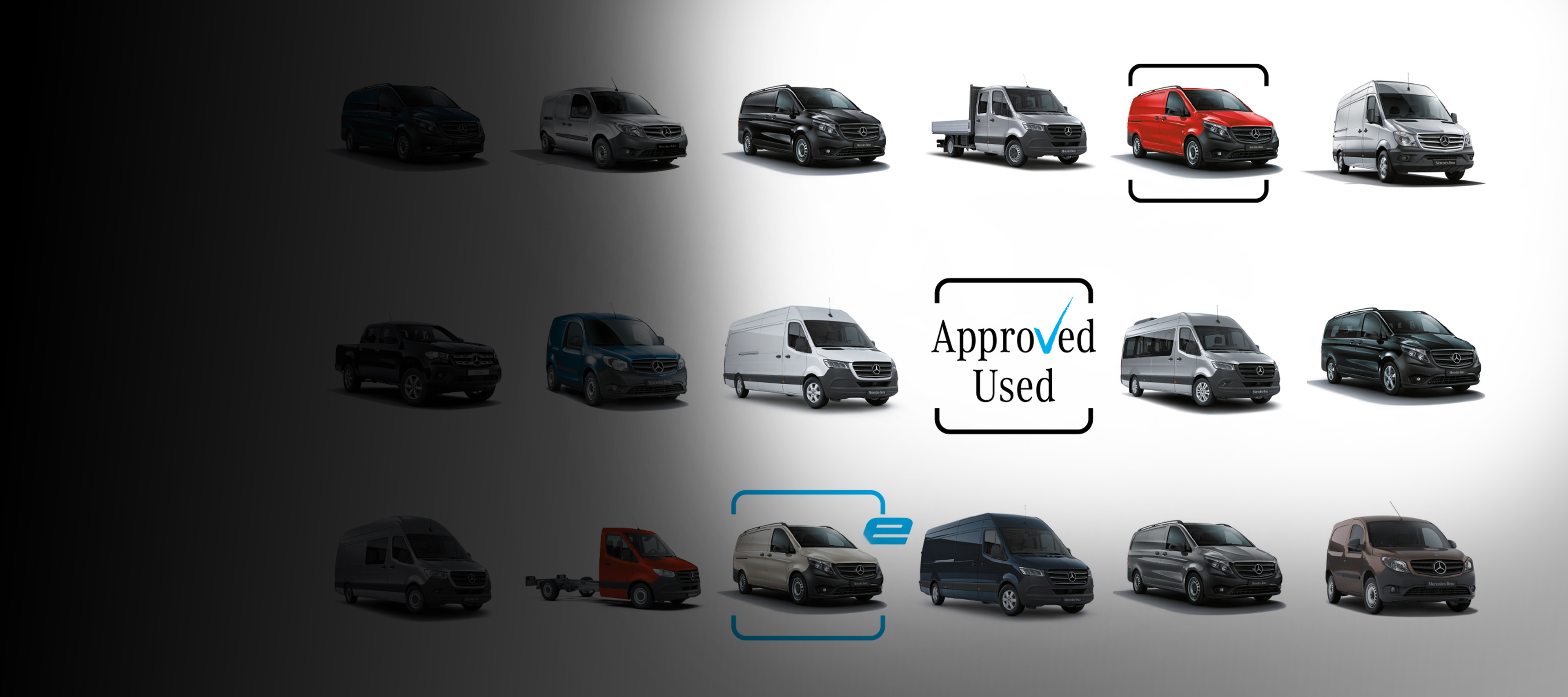
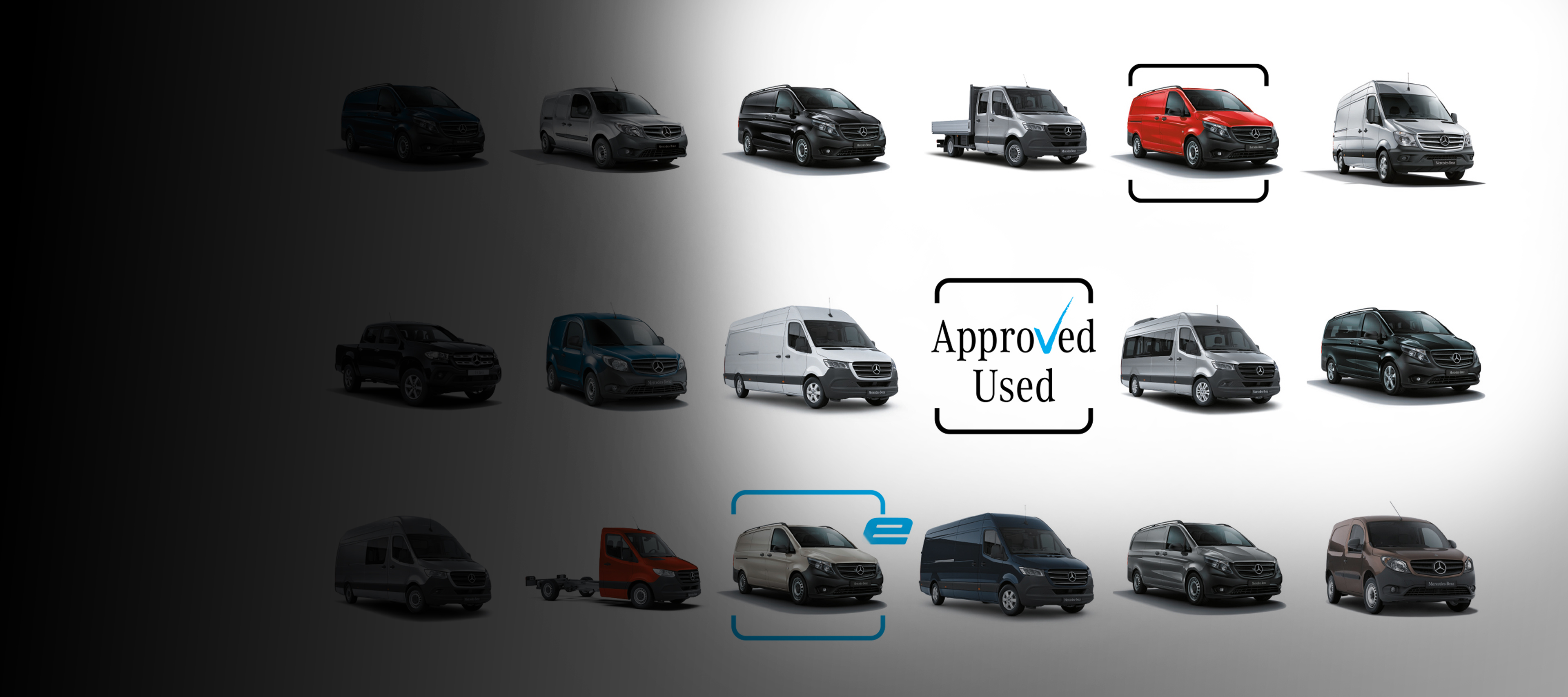
A selection of Mercedes-Benz Approved Used vans.

Mercedes‑Benz Approved Used vans for sale.

Every Approved Used van is carefully inspected and prepared to meet high standards of quality and reliability, and comes with a minimum of 3 months' MOT, up to 3 days' complimentary insurance*, and FREE 24/7 breakdown cover and roadside assistance through Mercedes-Benz MobiloVan.**

Browse the full range of Approved Used vans to find a vehicle that suits your business requirements with added peace of mind.

Mercedes‑Benz Approved Used vans for sale.

If you’re ready to take the next step, you can explore Mercedes‑Benz Approved Used vans for sale online. Each vehicle is carefully inspected and prepared to meet high standards of quality and reliability.

Browse the full range of Approved Used vans to find a vehicle that suits your business requirements with added peace of mind.
*Please read the policy wording for full terms, conditions, exclusions and excesses. All Mercedes-Benz motor and van policies are arranged and administered by Wrisk Transfer Limited, registered in England and Wales under company number 10657213. Registered office: 45 Gresham Street, London, EC2V 7BG. Wrisk Transfer Limited is authorised and regulated by the Financial Conduct Authority (FCA) firm reference number 788062. The FCA’s register can be checked for details of permissions, history and contact details. Mercedes-Benz Insurance Services UK Limited registered in England and Wales under company number 03510012. Registered office: Delaware Drive, Tongwell, Milton Keynes, England, MK15 8BA. Mercedes-Benz Insurance Services UK Limited is authorised and regulated by the Financial Conduct Authority firm reference number 311715. Wrisk Transfer Limited offers insurance products from a range of insurers.
**Free for three years initially and renewed at each service, if serviced by Mercedes-Benz according to service intervals for up to 30 years from when the vehicle was first registered. Full list of exclusions and all product terms here.

Frequently asked questions about buying a used van.

An Approved Used van has undergone comprehensive checks and preparation to meet manufacturer standards. This typically includes multi‑point inspections, verified history and warranty coverage.

In contrast, a standard used van may not include these assurances, meaning buyers take on more risk regarding condition and reliability.
There’s no fixed mileage limit that determines whether a van is a good purchase. Instead, focus on service history, maintenance records and how the vehicle has been used.

A well‑maintained van with higher mileage can often be more reliable than a poorly maintained low‑mileage alternative.
Insurance costs vary based on several factors, including the driver’s profile, location, intended use and the type of van.

In many cases, used vans can be cheaper to insure than new models, as their market value is lower. Comparing quotes is the best way to find a competitive option.
Yes, all Mercedes‑Benz Approved Used vans include a minimum 12-month warranty as standard, offering valuable peace of mind.

This warranty applies to eligible vehicles with less than 150,000 miles at the point of sale and covers up to 200,000 miles overall. For full terms and conditions, buyers should speak with a Mercedes‑Benz Vans representative.

For more details and to explore available vehicles, visit the Approved Used vans online showroom.